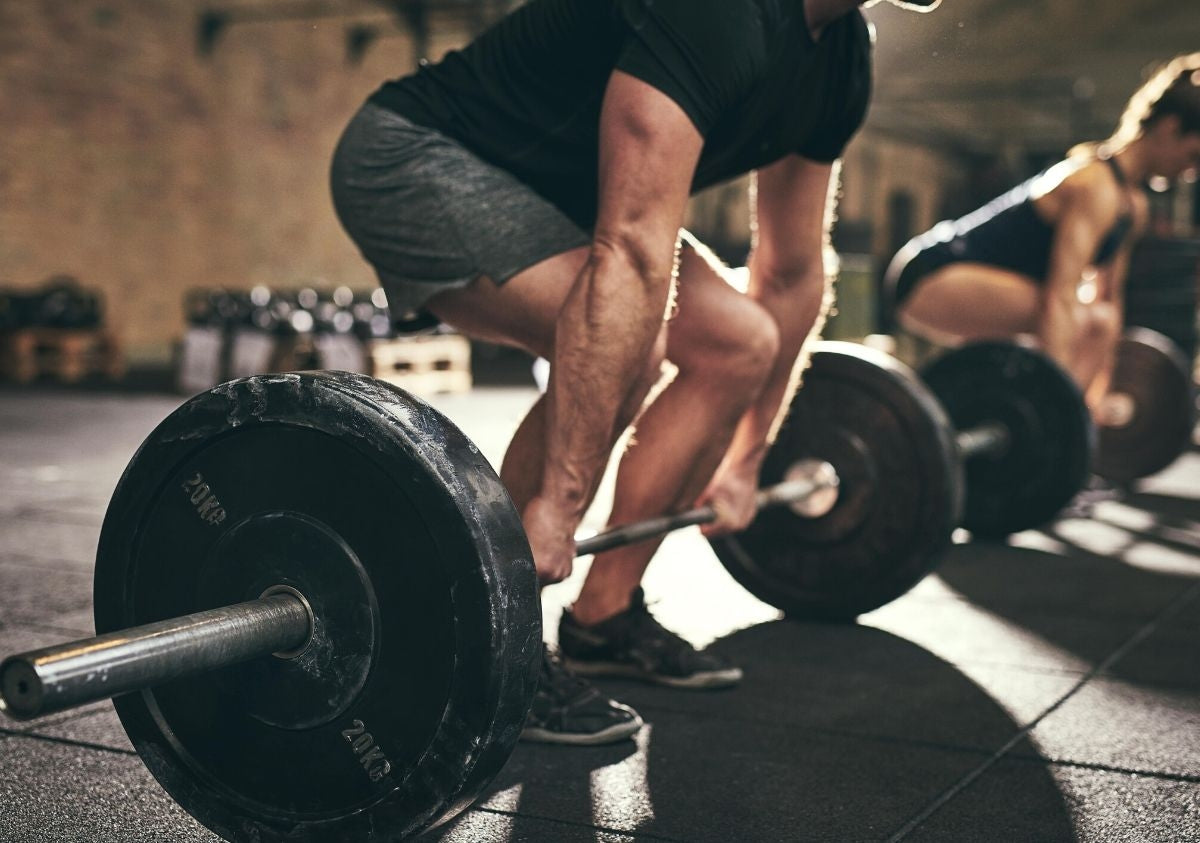
The deadlift is a full-body exercise that allows you to work multiple muscles simultaneously.
This is, therefore, the best way to get the most out of an exercise that provides a full-body workout and involves the use of strength, balance, and coordination.
Although performing this exercise primarily strengthens the lower back, legs, and core, its benefits don’t stop there:
- • It helps improve posture;
- • It helps build overall strength;
- • A single movement works multiple muscle groups, including the legs, thighs, core, arms, back, and shoulders;
- • Prevents injuries by strengthening muscles;
- • It helps relieve—and in some cases even eliminate—lower back pain;
- • Requires little equipment and can be easily adapted to various circumstances;
- • Increases body stability.
However, there are common mistakes in its execution that give this movement a negative reputation and can even lead to injuries.
Find out what these mistakes are and avoid them!
The 7 most common mistakes in the deadlift
1. Not warming up properly
A very common mistake in deadlifting is the lack of proper general activation—that is, warming up incorrectly.
It’s not enough to walk or run on the treadmill for a few minutes and do a few cardio exercises.
You should also focus on movements that improve mobility, in order to activate the muscles that will be engaged during deadlift exercises.
This mistake is one of the most frequent and one of the main reasons why injuries occur during weightlifting, which ultimately gives it a negative reputation.
2. Not positioning your feet correctly
You may never have thought about this small but important detail, but foot positioning is crucial for performing the deadlift correctly.
And what is the correct way? Some people position themselves too far back, which leads to excessive strain on the lower back during the upward phase of the movement, causing pain in that area.
Therefore, your feet should be positioned so that half of the foot—the front part—is directly under the bar.
As for width: You should place your feet hip-width apart.
3. Arching the Back
Often, people experience what is known as “rounding of the lower back”; that is, during this exercise, many people mistakenly arch their lower back, creating a curve that should be avoided as much as possible.
It’s easy to avoid this mistake and, of course, prevent the pain and injuries it can cause.
When you place your hands on the bar, keep your chest up and your back straight. It may seem like an unnatural movement and even difficult to execute, especially for beginners to the deadlift, but this is indeed the correct way to position yourself.
In addition, you should focus on lifting the bar using the strength of your legs, not your back.
4. Moving the bar
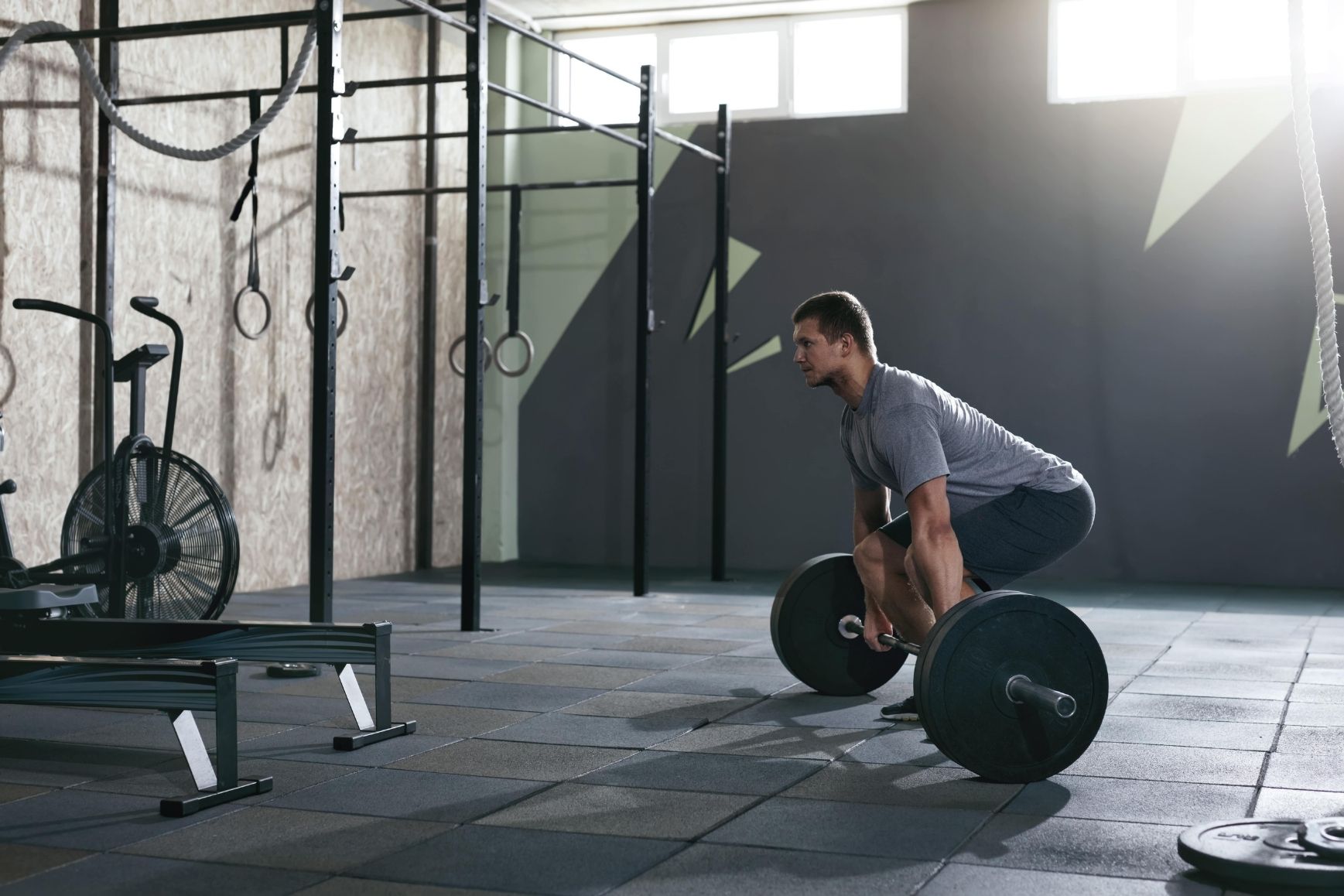
You already know how to position yourself in relation to the bar—read again: how to position yourself, which means that you move into the correct position, not the bar.
You should only grip the bar during the exercise and, of course, when picking it up and putting it down. All other grips are unnecessary and can even be harmful.
5. Gripping the bar incorrectly
So when you actually have to grab the bar, how do you do it?
Place your feet in the correct position, and your hands should grip the bar at a width slightly wider than your hips. About 2–3 centimeters wider.
This is the correct grip width to perform the exercise properly.

6. Incorrect hip position
Here, the mistake can happen in two ways: either by positioning your hips too high or by positioning them too low.
So how should you perform the deadlift correctly?
At the start of the exercise, your knees should be slightly bent; your legs should never be completely straight. Then, position yourself close to the bar and rise up parallel to it until your legs and spine are straight.
On the other hand, you shouldn’t lower your hips too much either—after all, you’re not doing a squat.
7. Shrugging your shoulders
This tendency happens almost unconsciously, but be aware that it is inefficient and can be quite dangerous.
The maximum force for performing the deadlift should come from your hip muscles, not your shoulders or any other part of your body.
No more excuses!
You now know the main mistakes to avoid when doing the deadlift.
However, if you still have any questions, this video can be quite helpful. Also, if you experience any difficulty or pain, you can always ask a personal trainer at your gym for help!
Happy training!