

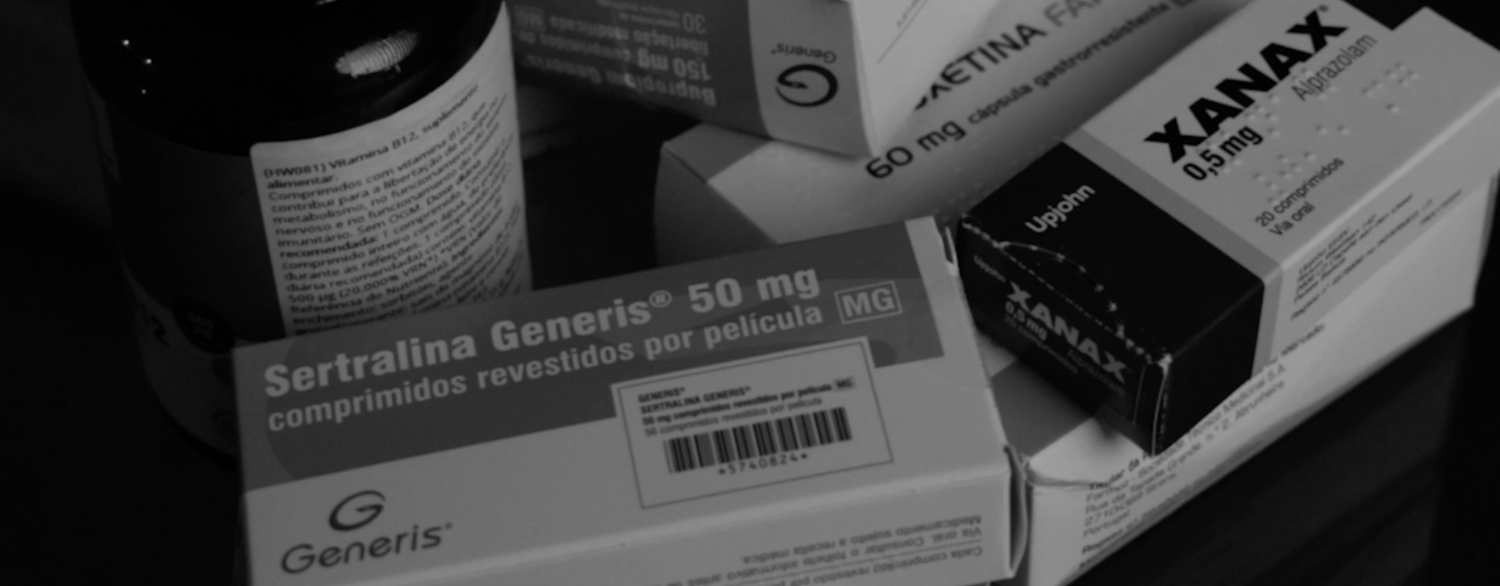
Today marks the World Depression Awareness Day. A date established to remind us of a reality that continues to affect thousands of people and is still often experienced in silence.
Depression does not choose months, calendars, or "right" moments. However, January, often associated with new beginnings and promises, can increase the emotional pressure for those already struggling with mental health issues.
With this article, we aim to bring clarity, dispel misconceptions, and reinforce the importance of talking, seeking help, and avoiding dangerous paths like self-medication.
Depression is not a "bad day"
One of the biggest myths associated with depression is confusing a less positive episode with a clinical illness.
Depression is not:
❌ a passing sadness
❌ a temporary lack of motivation
❌ a bad day or a difficult week
Depression is a recognized mental health condition that has a real impact on a person’s emotional, cognitive, and physical functioning.
According to data from the OECD (Organisation for Economic Co-operation and Development), Portugal is among the European countries with the highest prevalence of mental health problems, with depression affecting hundreds of thousands of people.
"It’s all in your head" is not an answer
Another common myth is the idea that talking about depression can make the situation worse or "feed the problem."
Scientific evidence points in the exact opposite direction:
✅ talking, asking for help, and seeking support are protective factors, not risk factors.
Silencing, minimizing, or invalidating feelings contributes to:
👉 isolation
👉 delayed diagnosis
👉 worsening symptoms
Self-medication: a silent problem
One of the most worrying data related to depression is the increasing use of self-medication.
It is estimated that in Portugal, more than 150,000 people may resort to some form of self-medication to cope with depressive symptoms such as anxiety, insomnia, or persistent sadness.
According to OECD data and public health entities, self-medication can:
👉 mask symptoms
👉 delay diagnosis
👉 create dependencies
👉 worsen clinical conditions
Taking medication without medical supervision does not treat the cause and can have serious consequences.
Physical exercise helps but does not replace treatment
It is important to be clear and responsible.
Physical exercise has proven benefits for mental health:
✅ improves mood
✅ contributes to emotional regulation
✅ reduces anxiety symptoms
✅ supports sleep quality
But physical exercise does not replace medical or psychological support when clinical depression exists.
👉 Exercise supports, complements, and contributes to overall well-being.
❌ It should never be presented as an isolated cure or sole solution.
January, new beginnings, and unrealistic expectations
January can be a difficult month for those living with depression. The social pressure associated with rapid changes, rigid goals, and "new year, new me" can intensify feelings of failure and frustration.
It is important to reinforce:
👉 it is not mandatory to "start everything now"
👉 progress is not linear
👉 taking care of mental health does not follow calendars
More important than promises is consistency, support, and time.
What really helps
Talking about depression responsibly involves reinforcing behaviors that protect, not blame.
✔️ seek professional help
✔️ talk to someone trustworthy
✔️ avoid self-medication
✔️ consciously include movement
✔️ respect limits
✔️ recognize that depression is a health condition
Final considerations
Talking about depression does not weaken anyone. It is recognizing a reality that exists and is still often lived in silence.
Depression is not resolved with willpower, clichés, or quick fixes. It is resolved with information, support, professional care, and time. Each person has their own pace, context, and path.
Avoid self-medication, seek professional help and talk openly are fundamental steps. Physical exercise can and should be part of this process as a complement to mental health care, never as a substitute.
Where to ask for help in Portugal
If you or someone close to you needs support, there are resources available:
📞 SNS 24
808 24 24 24
Available 24 hours a day
📞 SNS Psychological Counseling Line
808 24 24 24 (psychological support option)
📞 Voz de Apoio
225 50 60 70
Weekdays, emotional and psychological support
📞 SOS Voz Amiga
213 544 545 | 912 802 669 | 963 524 660 | 930 712 500
In case of emergency, seek immediate medical help or go to the nearest emergency service.


