☀️ With the arrival of warm weather, the body craves lightness
But lightness doesn’t mean "without substance," especially for those who train with specific goals or coach others in their training routines. Summer meals can (and should!) remain nutritious, practical, and tasty – and that’s where meal prep comes in as a powerful ally.
🥗 What are the benefits of preparing healthy meal preps in summer?
In summer, people tend to snack more, skip meals, or sometimes opt for lighter and "fresh" foods (which can sometimes be less nutritious). However, having prepared meal preps solves all that:
- Ensures adequate nutritional intake even on the busiest days;
- Prevents impulsive decisions and less nutritionally interesting choices;
- Allows adjustment of portions and food composition according to individual goals;
- And yes, saves money — which, let's be honest, never goes out of style.
Also, there’s a classic summer trap: thinking that "eating light" means ordering a salad, sandwich, or pastry at the nearest café/restaurant. In practice, many of these options are high in fat, have high caloric value, and low nutritional value (poor in protein, fiber, and complex carbohydrates). The result? Hunger soon after, low satiety, and a caloric intake that, while "light on the fork," can be heavy for your goals.
Meal prep, in this context, is like that workout that seems light but delivers results: practical, strategic, and personalized. It means having in the fridge or backpack an option designed to nourish, satisfy, and support your routine — without falling into fads or shortcuts that cost more later.
🍴 Five fresh, complete, and summer-friendly meal prep ideas
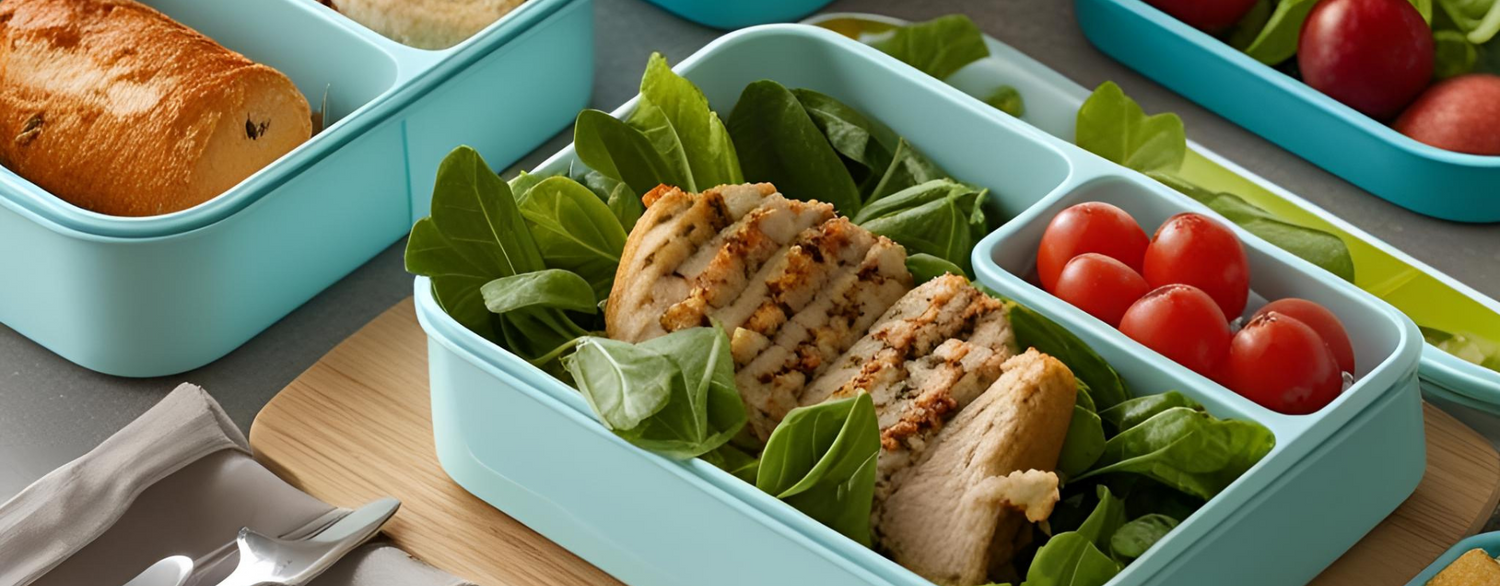
Here are 5 options for a week of summer training. Balanced, nutrient-rich, and light on the stomach:
- Monday: Grilled chicken with quinoa, beetroot, pineapple, and arugula + light lemon and mint vinaigrette
- Tuesday: Chickpea salad with tuna/cod, cherry tomatoes, bell pepper, and boiled egg + olive oil spray and oregano
- Wednesday: Wild/basmati rice bowl with shredded salmon, zucchini, broccoli, and sesame seeds
- Thursday: Stir-fried turkey/tofu strips with whole wheat spiral pasta, cherry tomatoes + fresh spinach + hummus
- Friday: Whole wheat wrap with low-fat cream cheese, shredded chicken/tuna in water, lettuce, carrot, and cucumber + seasonal fruit
⚖️ How to ensure these meal preps are balanced and performance-friendly?
Each meal should follow a nutritional structure that supports training, recovery, and health. Considering the pillars of a complete meal, it should include:
- Proteins: chicken, turkey, rabbit, tuna, eggs, legumes, soy, tofu, tempeh… essential for muscle building and repair.
- Complex carbohydrates: brown rice, quinoa, sweet potato, legumes… provide stable and sustained energy.
- Healthy fats: olive oil, avocado, nuts, and seeds – important for vitamin absorption and hormonal balance.
- Vegetables and fruit: fiber, vitamins, antioxidants, satiety – practical visual rule: at least ½ of the plate should contain vegetables.
Don’t forget micronutrients: potassium, magnesium, vitamin C, iron, zinc – essential for performance, immunity, and recovery.
❄️ Care with storage: safe meal preps in summer
The nutritional quality of foods must be accompanied by food safety care, especially with heat.
- Use thermal boxes or bags with reusable ice packs.
- Avoid leaving meal preps in the car or under the sun.
- Avoid sauces with raw eggs or unpasteurized dairy products.
- Always cook at safe temperatures (>70°C).
- Do not refreeze previously thawed foods.
- Wash fruits, vegetables, and containers well.
According to the DGS - Directorate-General of Health, foods should not remain at room temperature for more than 2 hours. Keeping foods <5ºC or >60ºC avoids the "microbiological danger zone."
💧 Hydration and physical performance in summer: inseparable
Hydration is fundamental to ensure good physical performance. In summer, we lose more fluids and salts through sweat. Even mild dehydration can:
- Reduce strength and endurance;
- Increase fatigue;
- Decrease concentration;
- Compromise recovery.
- Basic rule: 35 ml of water per kg of body weight per day.
- During long or intense workouts in the heat: replenish between 400–800 ml/hour.
🥤 Healthy alternatives to water (and how to make homemade isotonic drinks)
Yes, there is life beyond water. And without resorting to sugary sodas or isotonic drinks.
Homemade isotonic drink:
- 500 ml of water or coconut water
- Fresh juice from 1 orange or ½ lemon
- 1 teaspoon of honey (optional)
- A pinch of sea salt
- Ice to taste
Other refreshing options:
- Cold infusions (hibiscus, green tea, rooibos) with fruit or mint
- Flavored waters with ginger, cucumber, lemon
- Natural coconut water
🧪 How to know if you are well hydrated?
Practical signs:
- Very dark urine = clear dehydration
- Dizziness, cramps, headache = warning signs
- Dry mouth, low performance = the body is asking for water
Start your workout already hydrated and take regular breaks to drink. Water regulates temperature, transports nutrients, lubricates joints, and supports cognitive performance.
✅ Final considerations
Prepare your meal prep this week and feel the difference in your energy, focus, and performance. Eating well isn’t about trends, it’s about consistency. And hydrating well isn’t a detail — it’s part of the strategy. Take care of yourself with flavor, lightness, and purpose.
❓ FAQ – Nutrition and training in summer
What are the best foods for summer meal preps?
Options with lean protein, complex carbs, vegetables, and seasonal fruits. Avoid heavy sauces or perishable ingredients.
What should I drink during summer workouts?
Water is essential, but for long or intense workouts, choose natural isotonic drinks or coconut water.
How to prevent meal preps from spoiling?
Use thermal bags and avoid sun exposure. Store in the fridge as soon as possible.
📌 About the author
Rita Marques is a nutritionist passionate about helping people find balance between body, mind, and nutrition. With practical experience in the sports world and an individual-focused approach, she writes for BOOMFIT about functional nutrition, performance, and well-being topics.