Equipping a combat center requires a very different approach than that used in a traditional gym.
Yet many spaces continue to be designed based on generic models, focused on machines and a training logic oriented towards hypertrophy.
In combat sports, the demand is different:
✅ force production under instability
✅ repetition of high-intensity efforts
✅ technical control under fatigue
When these variables are not considered, the space may seem complete but does not prepare the athlete for the reality of competition.
The mistake starts in the logic, not the equipment
One of the most common errors is not in the lack of material, but in how it is chosen.
There is a natural tendency to seek variety. But in a combat center, the main criterion must be relevance.
Each piece of equipment must fulfill a specific function:
- Does it improve performance?
- Does it replicate combat demands?
- Does it allow real progression?
If it does not directly contribute to performance, it occupies space and dilutes training.
Strength zone: the foundation that defines transfer to combat
The strength zone is often undervalued or poorly structured.
Many centers rely excessively on machines. This limits the development of combat-applicable strength.
In combat sports, strength:
✅ does not occur in fixed trajectories
✅ is produced in imbalance
✅ involves multiple planes of movement
Essential equipment
The base should rely on free weights:
👉 bars and plates
👉 kettlebells
👉 dumbbells
More important than the equipment itself is its ability to generate direct transfer to combat.
Physical conditioning: intensity that replicates competition
Cardiovascular training in a combat center is neither continuous nor predictable.
It is: intermittent, explosive, and with incomplete recovery.
This demands equipment capable of supporting this pattern.
Recommended equipment
The Air Bike stands out because:
✅ it involves the entire body
✅ allows controlled maximum effort
✅ best replicates the competitive pattern
It is not a matter of trend, but physiological specificity.
Functional zone: less equipment, more intention
Here, the most common mistake is excess.
An overloaded space compromises:
👉 movement
👉 technical execution
👉 training flow
Space organization: the most underestimated factor
Many projects fail not because of equipment, but because of organization.
The lack of well-defined zones compromises safety, intensity, and efficiency.
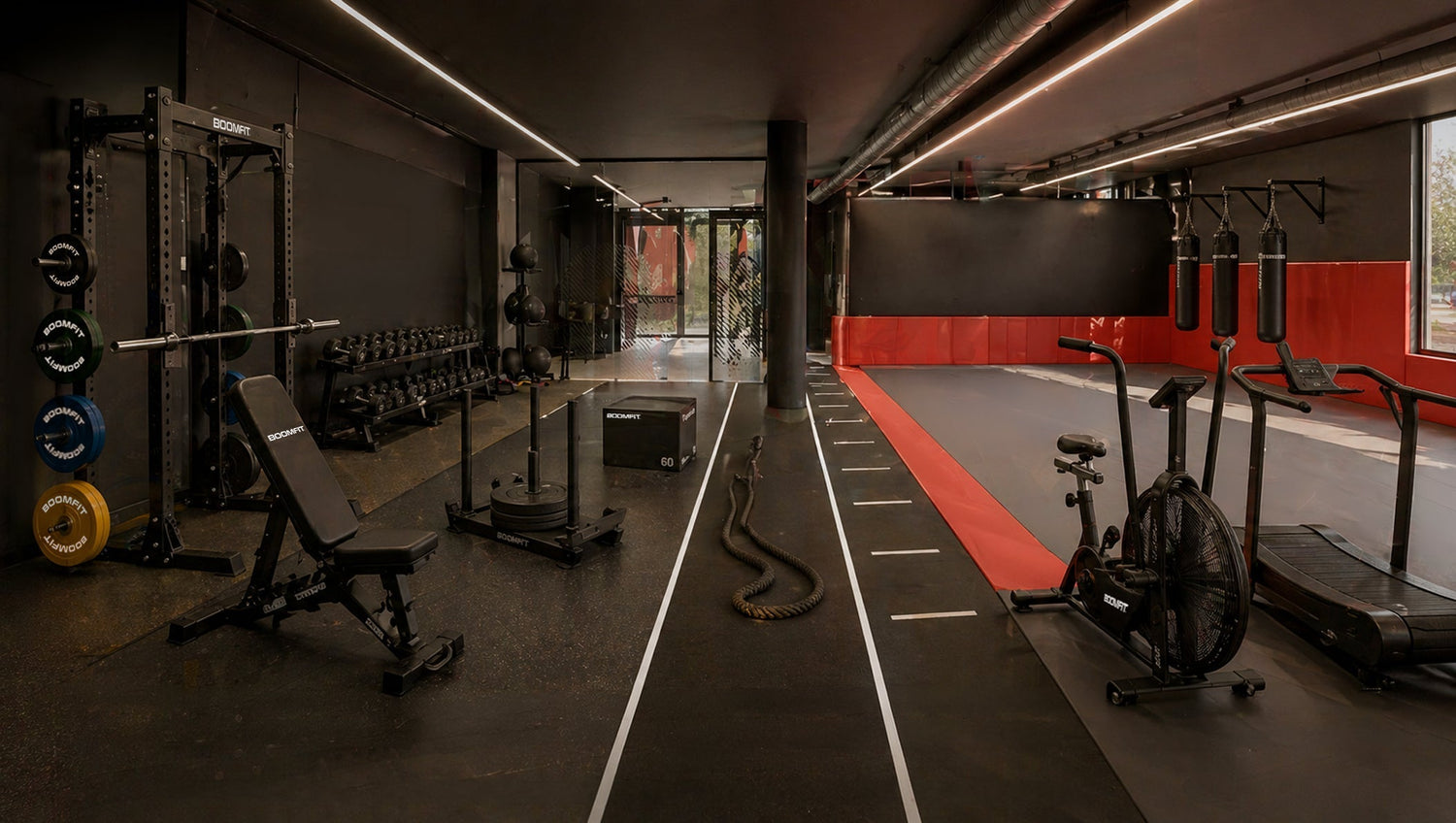
Essential separation
A combat center should clearly divide:
👉 technical zone (tatami)
👉 strength zone
👉 physical conditioning zone
Mixing areas reduces training quality and increases risk.
The impact of a well-thought layout
Good organization allows:
👉 quick transitions
👉 simultaneous use
👉 adaptation to different training phases
And this directly translates into better performance.
What distinguishes a well-equipped combat center
In a high-level project, equipment is not chosen in isolation.
Every decision should consider:
👉 type of athlete
👉 training methodology
👉 actual intensity of use
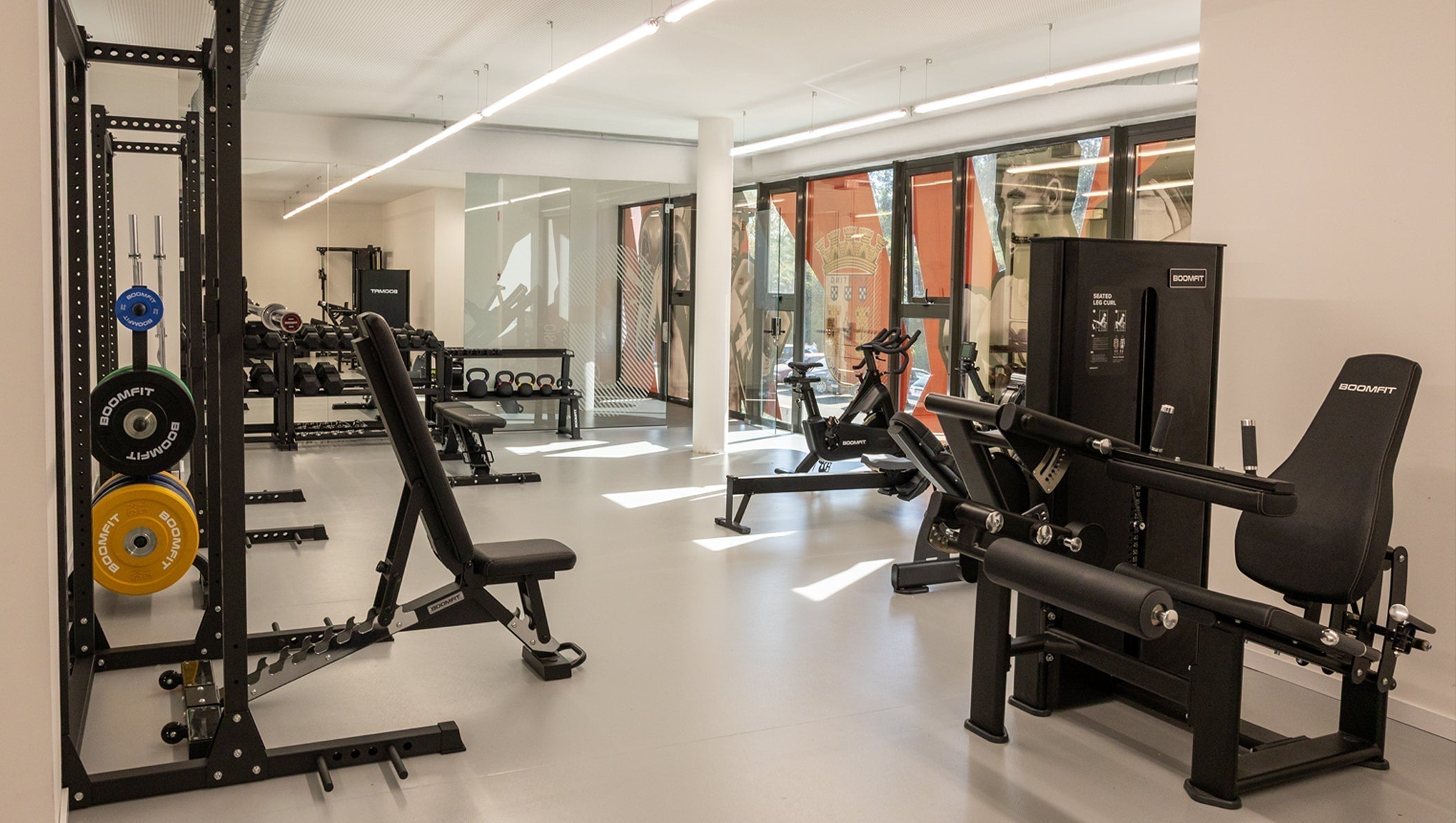
Projects like the SC Braga combat center clearly demonstrate this: the difference is not in the amount of equipment but in the quality of the strategy.
How to choose the right equipment (practical checklist)
Before investing, validate these criteria:
- Does the equipment replicate combat demands?
- Does it allow training in multiple planes?
- Can it support high intensity and continuous use?
- Does it integrate well within the available space?
- Does it contribute to athlete progression?
If the answer is “no” to any point, the decision should be reconsidered.
Errors to avoid when equipping a combat center
- Prioritizing aesthetics over functionality
- Buying equipment without a training strategy
- Excess of guided machines
- Lack of free space
- Mixing technical and physical zones
Conclusion
Equipping a combat center is not about filling space.
It is about building an environment that:
✅ supports training
✅ enhances performance
✅ respects the reality of the sport
When well done, the space ceases to be neutral and becomes a competitive advantage.
The next step
The starting point is not equipment. It is training logic.
At BOOMFIT, projects are developed based on the actual use of the space, ensuring:
- careful equipment selection
- layout optimization
- total focus on performance
If you are creating or improving a combat center, start here.
👉 Talk to the BOOMFIT team and develop a space tailored to your reality.
FAQ
- What equipment is essential in a combat center?
Bars, plates, kettlebells, dumbbells, Air Bike, and basic functional material form the base.
- Should I use machines in a combat gym?
They can complement but should not be the foundation. Priority is free weights and functional movement.
- What is the most common mistake when setting up a combat center?
Lack of strategy: choosing equipment disconnected from training reality.
- How much free space is needed?
As much as possible. Free space is essential for mobility, technique, and safety.
- How to organize a martial arts gym?
By clearly separating technical, strength, and physical conditioning zones.