Approaching the individual holistically and integratively: this is the main goal of Osteopathy, a preventive and body-regulating technique that helps both beginner and professional athletes feel better while exercising.
There are many positive aspects to including Osteopathy in a training plan, making it a complement to physical exercise with long-term impacts.
For this reason, BOOMFIT once again gives voice to professionals to help athletes and Personal Trainers boost their activity.
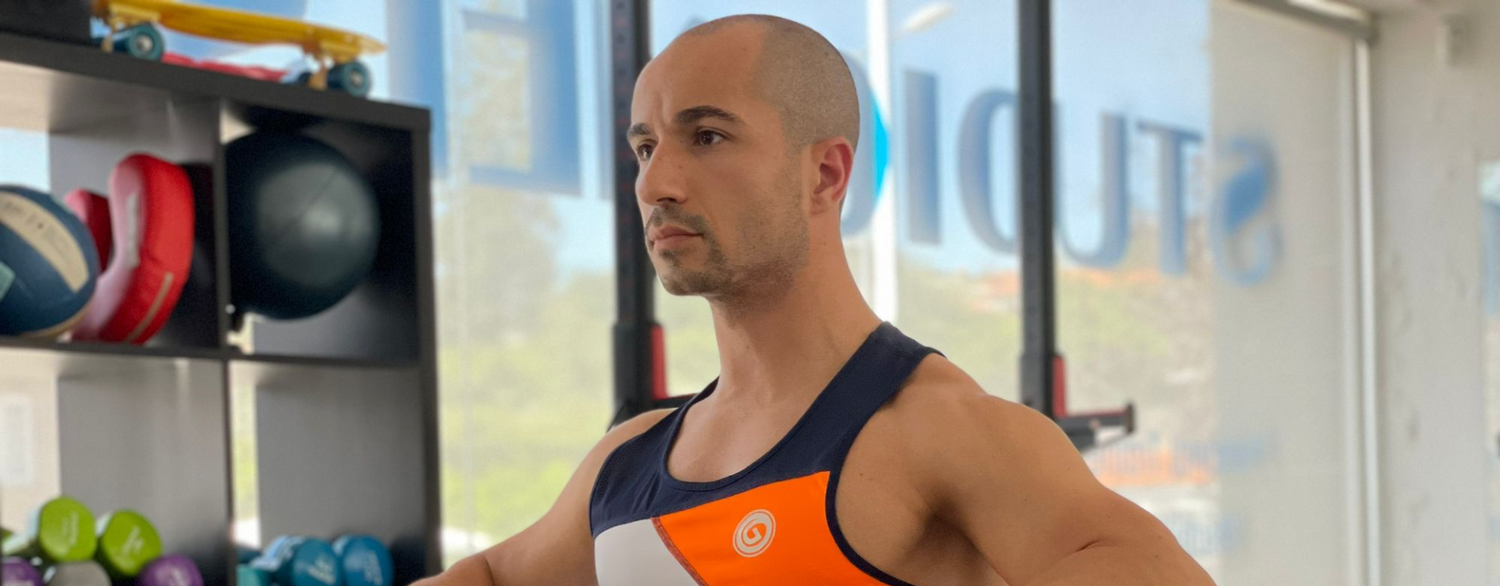
We spoke with Nélson Silva, a fitness enthusiast who is both a Personal Trainer and an Osteopath, offering his athletes an integrated activity that cares for both body and mind.
Osteopathy "Doesn't Prevent" But Helps Prepare
When we talked with Nélson about Osteopathy, he was keen to clarify a common misconception: "It doesn't make sense to see Osteopathy as something that prevents" injuries, especially since "an injury itself can never be predicted."
So, how is Osteopathy an ally? Nélson explained that the "benefits" of the "manual work integrated into the human body" are many: "Our work [as osteopaths] fits into this sense of prevention, to avoid injuries from setting in faster and to allow the client to train more freely and for their body to regenerate and adapt more easily to exercise," he emphasizes. By consulting an Osteopath and doing some sessions, "you are better prepared to react to the difficulties and challenges that physical exercise might cause."
At Nélson's clinic, people come with complaints such as “cervical (tension), shoulder (tendinitis), and lumbar spine (overload),” but athletes also frequently have complaints, as "usually they work at a high physiological limit," pushing their bodies to the edge: "As professionals with various manual techniques, we work on structures, ligaments, tendons, and muscles to make the organism lighter, more responsive, and to enhance cellular recovery," he says, adding that there are techniques applied during sessions, such as the "muscle energy technique, where we work on strength, endurance, flexibility, and mobility. This is a very specific technique and has excellent clinical results."
However, Osteopathy must be evaluated individually for each athlete: "It's important to understand the limit! If we were to outline a profile of someone who exercises weekly and has overload, they should have a monthly organism check-up," he exemplifies, noting that this would bring "physiological, psychological, and hormonal benefits," especially to the "central nervous system. Many techniques improve the organism's synchronization," emphasizes Nélson.
The Personal Trainer also advocates that beyond athletes, Osteopathy should be practiced by other fitness professionals: "As professionals, we have to understand the value of each area, be aware of the worth of each professional and what we represent and convey to others," he adds.
Final Considerations
For Nélson, Osteopathy is a "complement" to exercise, bringing "lightness" and "preparation" to the body to cope differently with physical exercise, helping it manage injuries and everyday life.
Therefore, the professional stresses that Osteopathy should be introduced to athletes, but Personal Trainers should also personally test the benefits of the practice.
If you are looking for equipment for your workouts or sessions, BOOMFIT is your trusted brand, used daily by more than a thousand Personal Trainers.
Happy Training!