It was created in the early 20th century, became popular in the 1990s, and today is a widely practiced activity in Fitness Studios worldwide.
We are talking about Pilates, a method created by German Personal Trainer Joseph Hubertus Pilates, which brings benefits to all practitioners, improving their mental and physical health.
There are derived forms and methods, but although it focuses on the core and flexibility, they all share something in common: they center on the athlete's needs, assisting on multiple levels and having long-term impacts, from preventing urinary incontinence to improving sleep quality.
For many beginners, attending Pilates sessions at a gym can be a viable option. But that is not the solution for everyone, as some may venture into practicing at home, leading to wrong decisions that can end up harming rather than helping.
Therefore, BOOMFIT spoke with Sofia Leitão, Personal Trainer and Pilates Instructor, to tell us a little more about this method and how it can be practiced safely anywhere.
“All exercises will help you!”
When we started our conversation with Sofia, we wanted to understand if it is really possible to do Pilates at home and achieve results, and the answer was a clear “yes”. But beginner athletes must take precautions: “If you have never done [Pilates], you must first have in-person or online guidance to help with feedback on posture, movement, and muscle activation,” she emphasized, especially since it is necessary to “design a training plan tailored to you and your needs. Not all exercises suit all people.”
In fact, it is the plan designed by a qualified instructor that will structure the sessions, even if the athlete has limited time available: “If you don’t have much time, you can agree on doing mini workouts of 15 minutes two, three or four times a week,” she exemplifies, suggesting that the motto to follow is that “it's better to start few times and not get discouraged than to set the bar too high and then fail to keep the plan.” However, the plan should involve a “sincere” and collaborative participation from the athlete, who must “disclose health problems, difficulties, pains, and real goals” when the plan is being made and communicate with the professional for assistance if doubts arise. It is also essential that the athlete understands that “initially, they must perform exercises that, at first glance, seem easy but have to be executed correctly to progress.”
Over time, Pilates can be included in the daily routine: “While driving, when stopping a car at a traffic light or crosswalk, it is possible to contract the pelvic floor,” or “[do] some stretching exercises in the office chair” are just some examples. Measurable progress will be seen. When asked how to measure progress in Pilates practice, the professional indicated that the easiest way is by “filming your workouts, taking photos, and you will see the differences achieved”: “After 3 months of training, your flexibility improves and your spine mobility will benefit,” she assures.
For Sofia, “a good mat” is the most “important piece of equipment,” and she also recommends “resistance bands” of various intensities and the “massage ball for the foot. These pieces of equipment are great training aids,” assures the Personal Trainer, stating these are basic equipment and that later athletes can invest in a “Pilates ball,” a “Pilates ring,” and a “mini ball”.
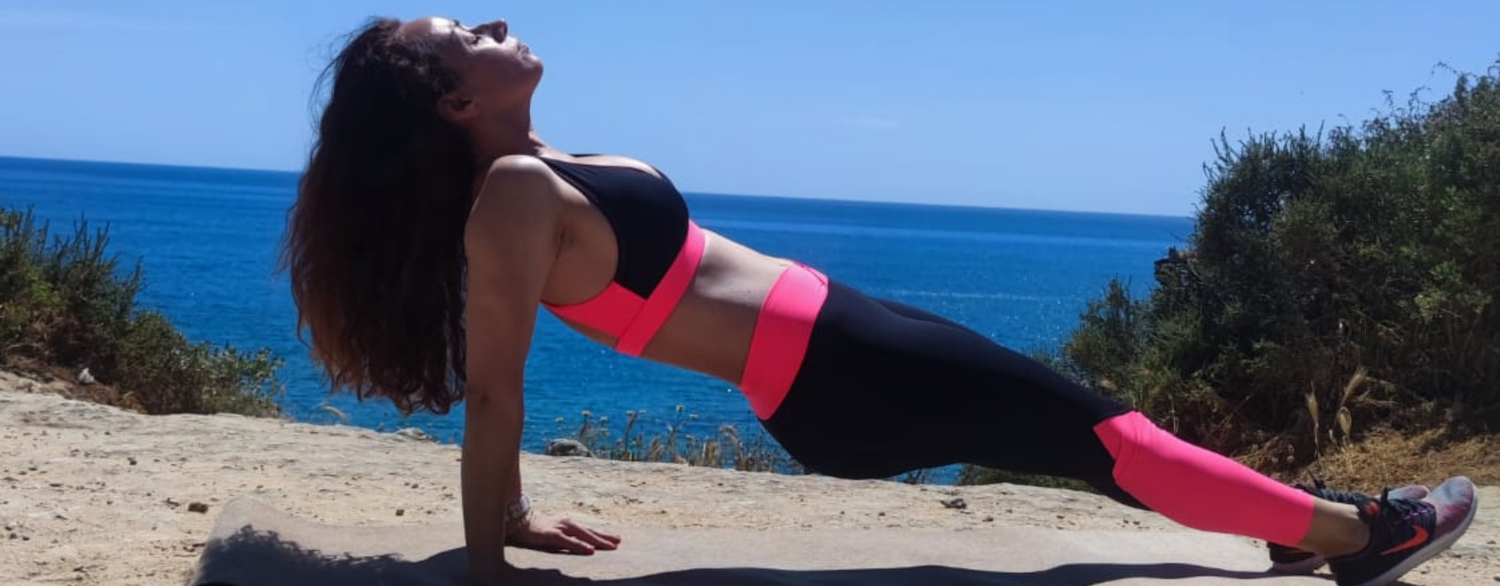
Initially, the athlete should also receive guidance on exercises involving body alignment, on lateral thoracic breathing, and how to activate the pelvic floor: “The ‘Shoulder bridge’, ‘One leg circle’, ‘Swimming’, ‘The swan’, ‘Spine twist’ and ‘Mermaid’ are all good exercises for beginners,” says Sofia, also mentioning other exercises like “Swimming on all fours, the ‘Hundred’ or the ‘leg pull prone’” which are extremely effective for strengthening the core. However, mobility and flexibility are also positively affected by performing these exercises: “All exercises will help you, depending on your specific needs,” she assures.
Final considerations
More than a mere complement, Pilates is a method that brings real benefits to those who practice it, positioning itself as something complete that looks at the athlete holistically.
For Sofia, Pilates is something that brings advantages with just three months of training and where all exercises contribute to improving the athlete’s health and well-being.
Each athlete is unique in their specifics, and for this reason, it is necessary to find a qualified professional who, like Sofia, is capable of providing the needed guidance and the right equipment.
This is why, at BOOMFIT, you will find a selection of quality products for Pilates practice.
We are your trusted fitness brand!
Happy Training!