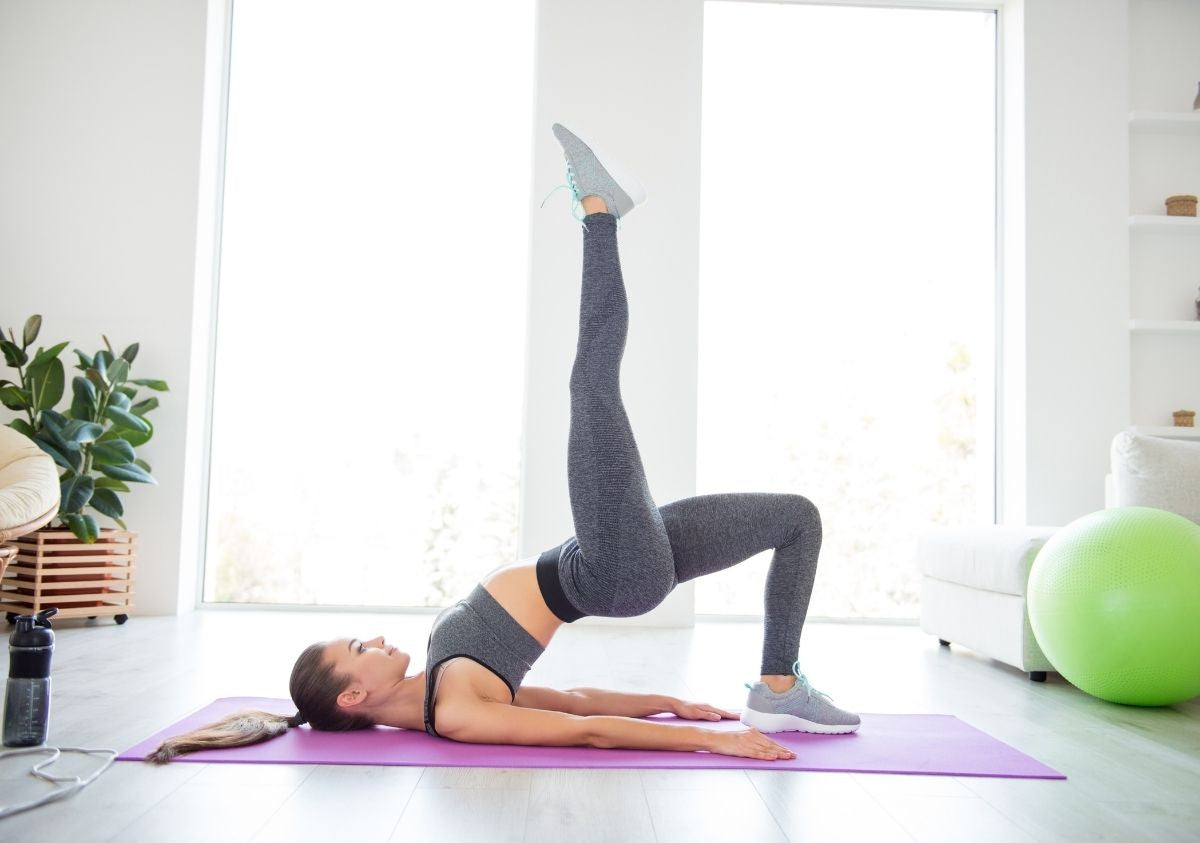
There are several accessories that help you train at home in a more dynamic, motivating, and even fun way. These exercises with resistance bands are proof of that.
Thus, resistance bands are an excellent way to maintain your home workout routine, as they come in different sizes and resistance levels.
What are resistance bands used for?
Using resistance bands in your workout is highly effective for targeting different muscle groups and can even be used for rehabilitation or muscle stretching.
In fact, that was the original purpose of this sports accessory, which was specifically designed to aid in rehabilitation sessions for muscle, joint, and tendon recovery—particularly recommended for athletes.
Nowadays, the use of resistance bands is quite widespread, and they have become a powerful accessory that helps maximize results in every workout.
Resistance bands are available in various models, textures, and resistance levels, making them very easy to use, whether you’re a professional athlete or a casual exerciser.
Additionally, they are an accessory you can take anywhere, since they don’t take up much space and are also quite affordable.
Work Your Entire Body with Resistance Bands
Resistance bands can be used to work various muscle groups, such as the chest, legs, arms, and back… We have 10 great examples for you.
Ready to work out?
Progression in these exercises can be achieved in two ways: either by increasing the resistance of the band or by increasing the number of repetitions or sets.
Resistance band exercises for the chest
1. Resistance push-up
Hold one end of the resistance band in each hand and loop it over your upper back. Get into a push-up position and perform the exercise as you normally would.
This resistance band variation has the great benefit of increasing the load on the upper body, forcing a more pronounced muscle activation.
Repeat 15 times for three sets, or two sets if you don’t exercise regularly.

2. Resistance Band Cross-Body Pull
For this exercise, the resistance band should be secured at a medium height, whether on a door, a pole, or a tree if you’re training outdoors.
This exercise is like doing a crossover on a pulley machine, but with resistance bands.
Then, stand to the side of this fixed point and hold the resistance band with the arm on that side.
Your starting position should be as follows: holding the resistance band, with your arms slightly bent and your palms facing forward. Then, pull the resistance band, keeping your arms slightly bent, until your palms cross or touch each other.
Do 20 repetitions for two to three sets.
Depending on where you position the band, you’ll work different areas of your chest.
If you pull from top to bottom, you’ll work the lower chest more.
If you pull from bottom to top, you’ll work the upper chest more.
Resistance band exercises for the back
3. Resistance Band Row
Start the exercise by placing your feet shoulder-width apart and stepping on the resistance band. Keep your knees slightly bent as you lean forward and hold each end of the band.
You should tighten your abs well and make sure your back stays straight at all times.
Next, simply pull the resistance band as if you were doing a dumbbell row.
Repeat 20 times for three sets.

4. Lat pulldown
Attach the band to an overhead anchor and stand facing the band with your back straight.
Hold the ends of the resistance band with your arms slightly bent, lean your torso forward, and bend your knees slightly.
Lower and raise your arms in a continuous motion, constantly contracting your back muscles. Make sure you don’t fully extend your arms, as this will engage your triceps.
Repeat 20 times for three sets.
Resistance band exercises for the legs
5. Leg Abduction with Extended Leg
Lie on your right side, keeping your heels, knees, hips, and shoulders well aligned. Your right leg should be slightly bent for greater stability during the exercise.
Your left hand is placed in front of you, your pelvis in a neutral position, and your core engaged, so that your lower back is slightly lifted off the mat.
The resistance band should be secured around your feet. The goal is to exhale and lift your left leg until the resistance band is fully taut.
Repeat 15 repetitions on each side, with a 15-second rest between each of the three sets.

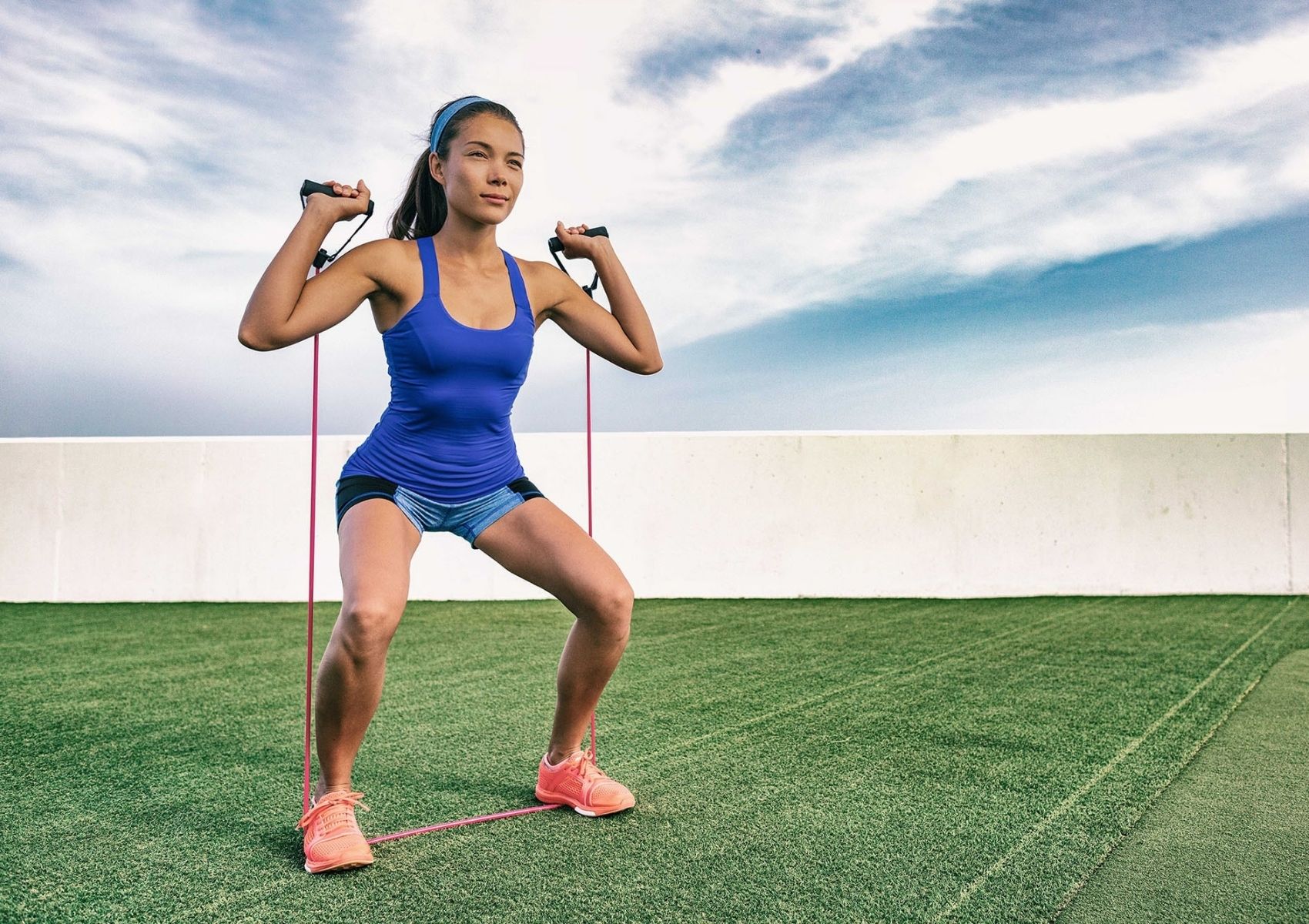
6. Squat
Place the resistance band under your feet, which should be properly aligned with your shoulders. Hold the ends of the resistance band with your hands and lift them up to shoulder height.
Perform a standard squat, engaging your core fully.
Do 15 repetitions over three sets.
Resistance band exercises for arms
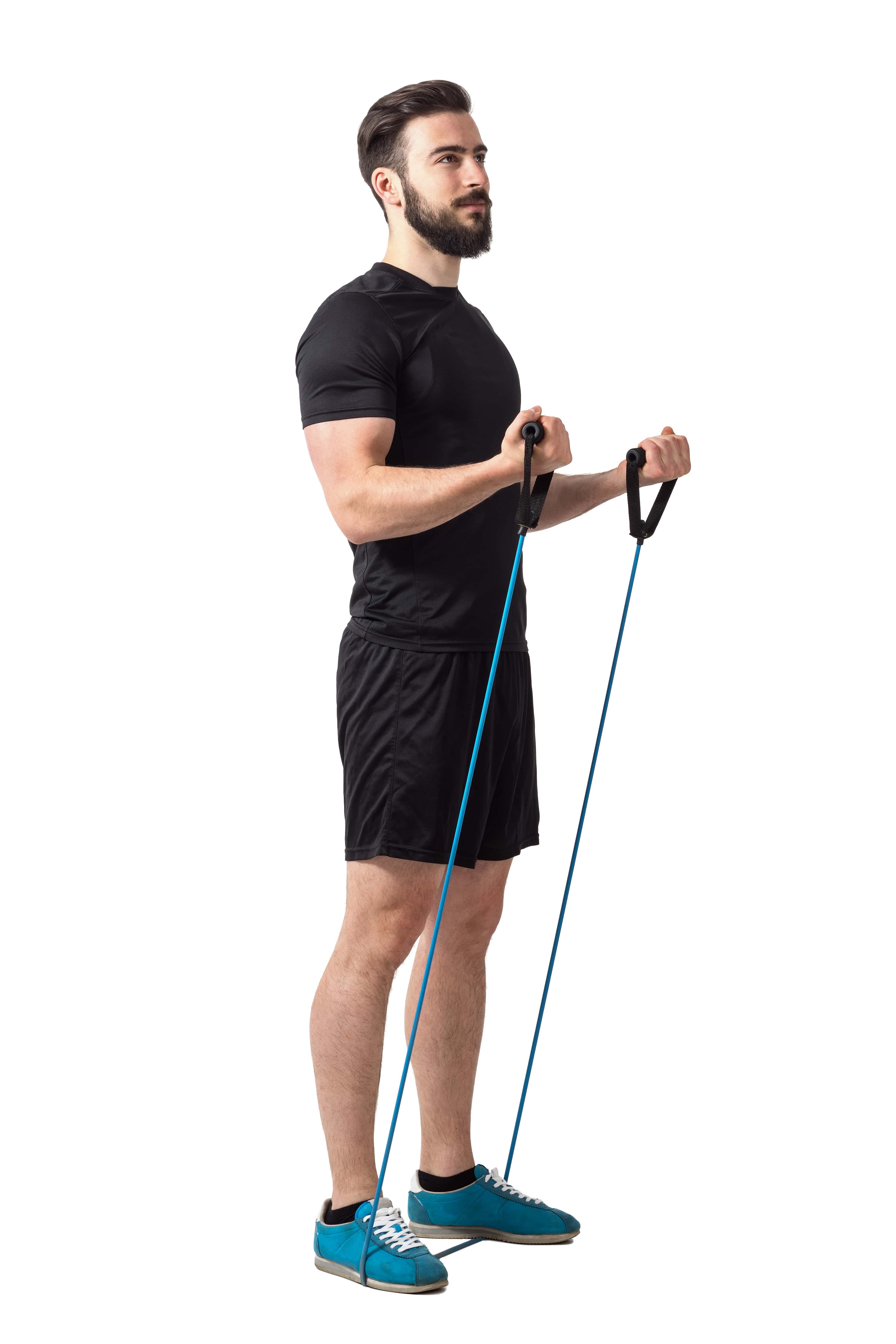
7. Resistance Band Curl
Secure the resistance band under your feet and hold each end, keeping both elbows close to your torso as you perform the curl movement.
Contract your biceps during the movement before slowly lowering your arms.
Repeat 15–20 times, for three sets.
8. Single-arm overhead extension
Secure the resistance band with your right foot and hold the ends.
Pull the end held in your right hand behind your torso so that your arm is bent at a 90-degree angle behind your head.
The goal is then to straighten your arm while the resistance band provides significant resistance.
Repeat the movement 15 times on each arm, for three sets.

Resistance band exercises for shoulders
9. Front raises
Start by securing the resistance band under your feet and holding both ends. Keep your back straight and your glutes and shoulders tight.
Raise your arms forward until they are parallel to the floor. Lower them slowly and raise them again.
Repeat 20 times, for three sets.

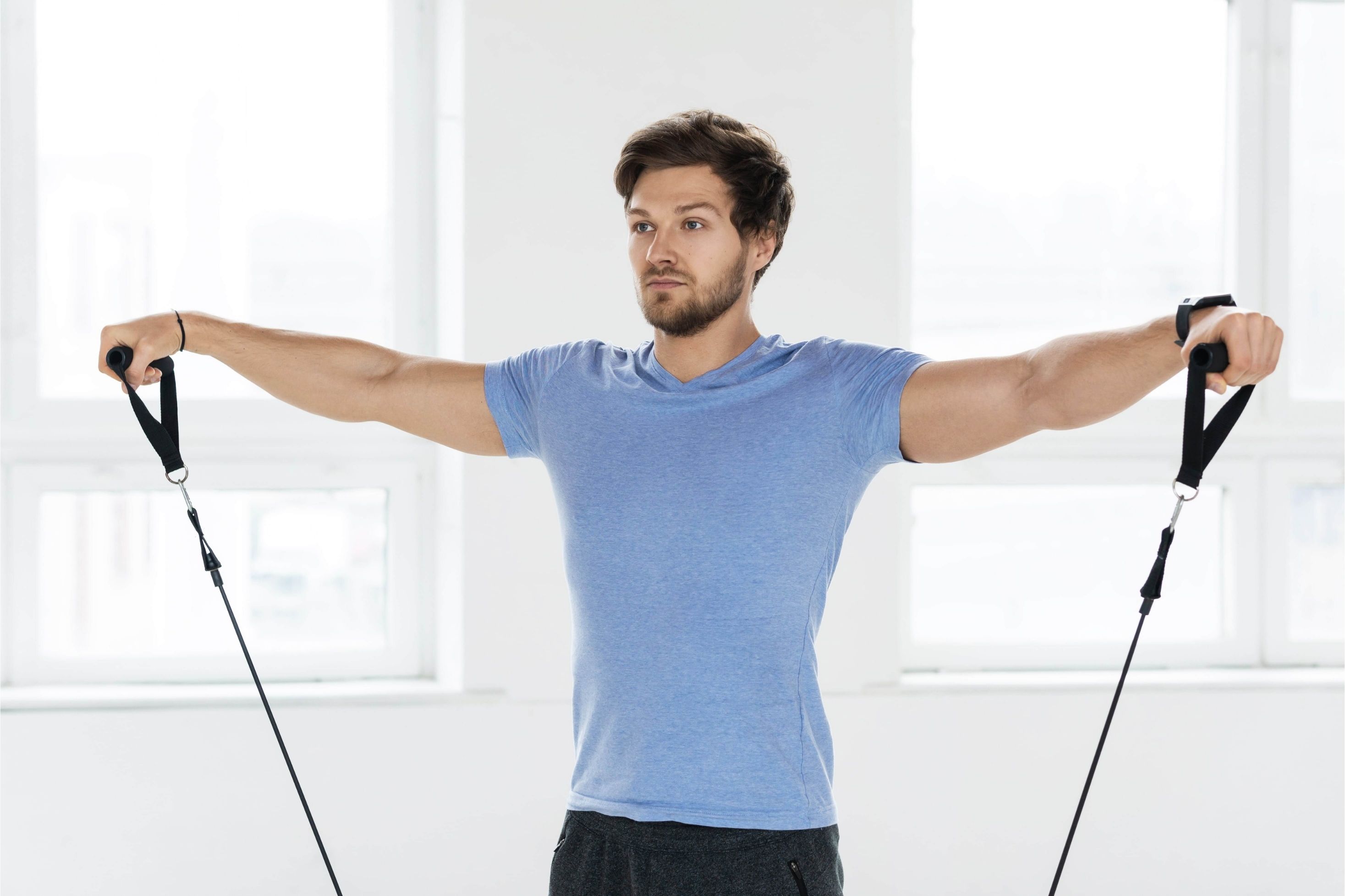
10. Lateral raises
To perform this exercise, secure the resistance band under your right foot and hold the other end with your right hand.
While keeping your arms and body straight, lift your arm out to the side, pulling on the band, until it is at head height. Hold this position for one second, then lower your arm slowly.
Repeat the movement 12 times on each arm, for three sets.
The mechanics of this movement are the same as if you were doing the exercise with a dumbbell.
Benefits of Exercising with Resistance Bands
In addition to being a very practical, affordable, and easy-to-carry accessory, resistance bands allow you to perform a wide variety of exercises, making for a very comprehensive workout.
But there are other advantages to using resistance bands:
- • They offer a wide variety of exercise options;
- • They allow for a greater range of motion;
- • They help strengthen joints, thereby reducing the risk of injury;
-
• They are suitable for anyone, of any age, and for any type of workout. Since they come in different resistance levels, resistance bands can be adapted to each person’s needs.
![As 9 Melhores Apps de Fitness Grátis [2022]](http://www.boomfit.com/cdn/shop/articles/b-artigo_20apps.jpg?v=1776097938&width=1200)